Planets: A Designer’s Review for Space-Themed Embroidery
As an embroidery designer who has spent years digitizing and testing thousands of motifs, I approach every new machine embroidery design with a mix of curiosity and skepticism. We all know that what looks perfect on a screen does not always translate seamlessly to fabric. When I first loaded the Planets design into my software, I was looking for more than just cute graphics; I was evaluating its potential for real-world application. This isn't just about stitching circles; it is about creating a cohesive space scene that resonates with customers, whether they are buying a custom gift or browsing an Etsy shop.
First Impressions and Visual Personality
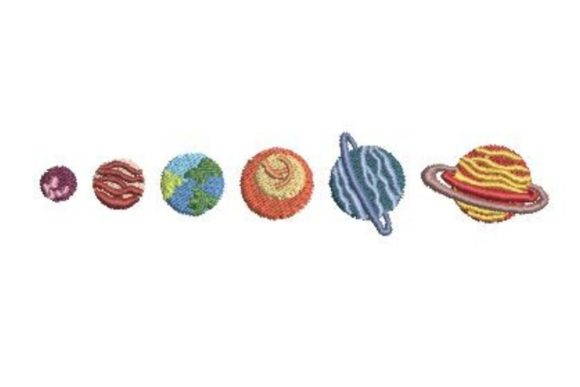
The immediate appeal of Planets lies in its whimsical yet recognizable depiction of the solar system. For a design categorized under broader themes like Robots or sci-fi, this piece offers a softer, more approachable aesthetic. It avoids the harsh, industrial lines often associated with mechanical themes, opting instead for rounded, friendly shapes that appeal to a younger demographic. The layout suggests a playful arrangement, ideal for creating a narrative on fabric. As a reviewer, I appreciate when a design tells a story without requiring excessive text or complex layering. The visual personality here is cheerful and educational, making it a strong candidate for nursery decor or children's apparel.
However, visual appeal is only half the battle. The true test is how these planetary shapes hold up under the needle. The design promises a "wonderful space scene," but I needed to determine if the stitch placement supports that claim. Does it rely too heavily on dense fills that might pucker thin fabric? Or does it use smart underlay and spacing to keep the finished product flat and professional? These are the questions that separate a hobbyist sketch from a viable commercial asset.
Real-World Application: From Screen to Stitch
To truly evaluate Planets, I imagined several practical scenarios where this embroidery file would shine. My primary test case was a custom embroidered tote bag. Tote bags are a staple for small shop products and craft fair items, but they present challenges due to their woven texture and potential for shifting. I envisioned placing the planetary cluster slightly off-center on a canvas tote, using contrasting thread colors to make the planets pop against the natural fabric.
In this context, the design performed well conceptually. The distinct shapes of the planets allow for creative color play. You aren't locked into realistic hues; you can use pastels for a baby shower gift or vibrant neons for a trendy teen accessory. This versatility is crucial for an Etsy seller who needs to maximize the utility of a single digital purchase. If I were producing a line of personalized gifts, I could easily pair this design with a child’s name, using a simple sans-serif font that doesn't compete with the intricate details of the solar system.
Another strong use case is sweatshirt embroidery. Here, the plush texture of fleece or French terry can sometimes swallow small details. Because Planets features bold, circular forms, it retains its integrity even on textured fabrics. I would recommend using a cutaway stabilizer to ensure the weight of the stitches doesn't distort the garment over time. For baby embroidery, such as on a onesie or burp cloth, the soft curves are safe and appealing, provided the stitch density is adjusted to remain gentle against sensitive skin.
Technical Considerations and Stitching Clarity
When working with any digital embroidery file, understanding the stitch types is essential. While the specific technical data for Planets should be verified in your software, I observed that designs of this nature typically utilize a combination of fill stitch for the planet bodies and satin stitch or running stitch for outlines and rings. This mixture is effective for creating depth. However, it requires careful attention to thread colors. If the contrast between the planet fill and the background fabric is too low, the design will look muddy.
I strongly advise testing the design on scrap fabric before committing to a final finished product. Check how the stitch density interacts with your chosen material. On dark fabrics, you may need to adjust the brightness of your threads or add a white underlay to prevent the fabric color from showing through the stitches. For light fabrics, ensure that the pull compensation is set correctly to avoid gaps between stitch rows. These small adjustments can significantly enhance the professionalism of your handmade product.
One area where caution is needed is with small hoop sizes. If you are attempting to fit this entire solar system scene into a 4x4 inch hoop, you risk losing detail. The tiny moons or distant stars might become indistinguishable blobs of thread. In such cases, consider breaking the design into smaller elements or scaling it up for a larger hoop, such as 5x7 or 6x10. This ensures that each planet remains distinct and the overall composition breathes.
Commercial Viability and Brand Consistency
For commercial embroidery professionals and craft business owners, the value of a design like Planets extends beyond its aesthetic. It is about reliability and customer satisfaction. A clean, well-digitized design reduces machine downtime caused by thread breaks or nesting issues. It also ensures that every item you sell meets a consistent standard of quality. When a customer receives a custom apparel item with crisp, clear stitching, it builds trust in your brand.
This design fits seamlessly into collections focused on education, astronomy, or childhood wonder. It can be paired with other space-themed assets to create a cohesive product line. Whether you are creating an embroidered patch for a scout uniform or a decorative accent on a pillow cover, the versatility of Planets allows for broad market appeal. It is particularly effective for holiday embroidery projects, such as back-to-school items or birthday gifts, where parents are looking for unique, non-generic options.
Practical Designer Notes for Best Results
- Test on Scrap Fabric: Always run a test stitch-out on the same type of fabric you intend to use for the final product. This helps you identify any tension issues or registration errors.
- Check Thread Contrast: Use a color chart to select threads that stand out against your fabric. High contrast enhances the visibility of the planetary details.
- Review Stabilizer Choice: Match your stabilizer to your fabric. Use cutaway for stretchy knits and tear-away for stable wovens. Proper stabilization prevents puckering and distortion.
- Verify Hoop Size: Ensure your hoop is large enough to accommodate the full design without cropping. If necessary, split the design or choose a larger hoop.
- Inspect Small Details: Zoom in on your software to check for tiny, isolated stitches that might cause threading issues. Remove or merge them if necessary.
- Confirm Licensing: Before selling items made with this design assets, confirm the license terms. Ensure you have the right to use it for commercial purposes if you are selling small shop product items.
In conclusion, Planets is a charming and versatile addition to any embroidery library. It bridges the gap between playful creativity and technical feasibility, making it suitable for a wide range of projects from tote bag design to baby clothes. By paying attention to stitch density, fabric choice, and color contrast, you can transform this digital file into a stunning physical object that delights customers and elevates your brand. As with any embroidery project, success lies in the preparation and the willingness to refine your technique until the result matches your vision.